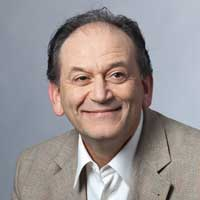
Prof Bershadsky graduated from Moscow State University, and received his Ph.D. at the Cancer Research Centre of the Russian Academy of Medical Science, under the guidance of Prof Juri Vasiliev. In 1988, together with Prof Vasiliev, he published a book entitled, Cytoskeleton (Plenum Press), which became known as the first textbook in this field of research. Prof Bershadsky moved to Israel in 1992, and since then has worked at the Weizmann Institute of Science, first as Scientist, and subsequently as Senior Scientist, Associate Professor, and Full Professor. He holds the Joseph Moss Professorial Chair in Biomedical Research (2001). Prof Bershadsky worked as a visiting professor at the Curie Institute in Paris in 2005, at the Marine Biological Laboratory Woods Hole, USA, in 2007, and at NUS, in 2008–2010. Since 2001, he is an Editorial Board Member of the international journal of “Cytoskeleton” (formerly “Cell Motility and the Cytoskeleton”).
PhD Cancer Research Centre of the Russian Academy of Medical Science